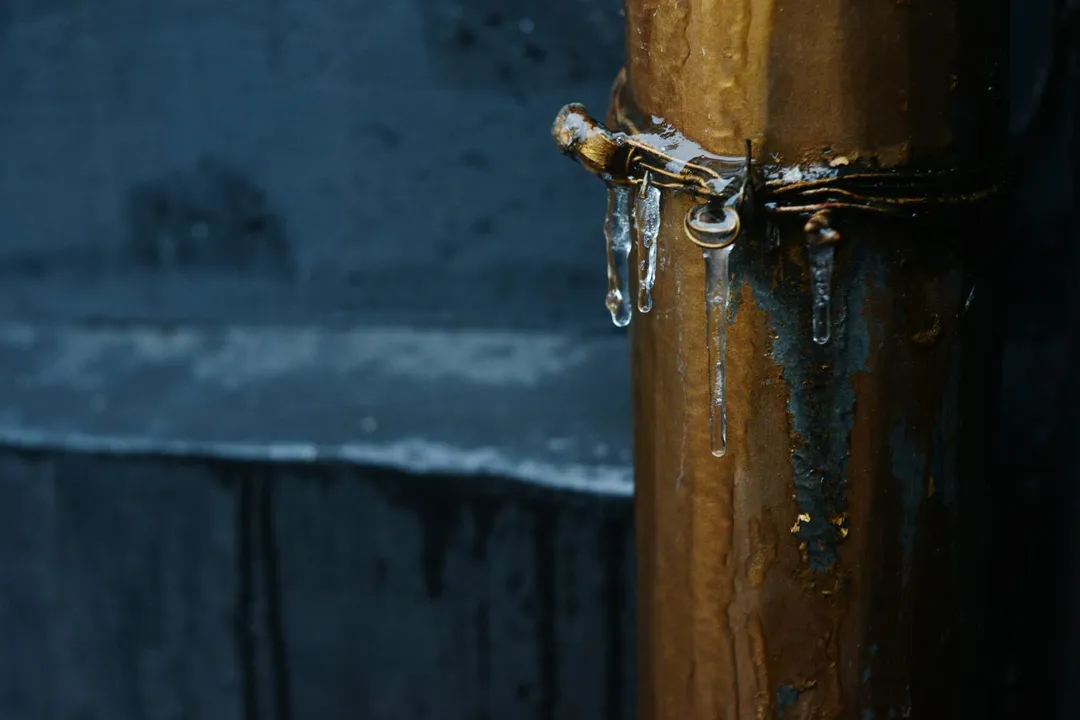
Water expands by about 9% when it freezes. In a pipe that has nowhere to go, so the ice pushes against the walls until the pipe or a fitting gives. The split often stays plugged with ice, which is why most people find a burst pipe the morning it thaws, not the night it froze.
Most of the winter calls we get could have been prevented with an afternoon of work in October.
Where pipes freeze
Indoor pipes in a heated room rarely freeze. The trouble is in the places the heating does not reach:
- Lofts and attics, especially pipes to a cold water tank and the tank itself.
- Garages, sheds, and utility rooms on an outside wall.
- Crawl spaces and under-floor voids, where cold air moves through the vents.
- Kitchen and bathroom pipes on outside walls, inside cupboards that stay shut.
- Outside taps and hose bibs, and the short pipe that feeds them through the wall.
Wind matters as much as temperature. A pipe near a gap in the wall or a vent can freeze at -3 °C, while one in still air in the same space survives -8 °C.
Protect them before the first frost
Find your main stop valve and check it turns
Do this first, in daylight, before you need it. It is usually under the kitchen sink, where the supply comes through the floor, or by the water meter. Turn it off and back on. If it is seized or stiff, have a plumber replace it now, not during a burst.
Insulate exposed pipes
Fit foam pipe lagging on every pipe in a loft, garage, crawl space, or under-floor void. Match the inside diameter to the pipe (15 mm and 22 mm are the common sizes in houses), tape the joins, and cover bends and valves too: a gap of a few centimetres is where it freezes. Lag the cold water tank on the top and sides, but not underneath, so warmth from the room below can reach it.
Seal the draughts around pipes
Fill gaps where pipes pass through outside walls with expanding foam or mastic, and close crawl-space vents that sit right next to pipework during a hard frost.
Shut off and drain outside taps
Turn off the isolating valve inside the house that feeds the outside tap, then open the outside tap and leave it open so the short length of pipe drains. Disconnect the hose: water trapped in a hose stops the tap draining and can split the tap body. With no inside valve, fit an insulated tap cover.
Keep some heat in unheated spaces
A garage or utility room with pipes in it should stay above about 5 °C. A frost thermostat on a heater or the heating on a low setting is enough. When you go away in winter, leave the heating on at 12 to 15 °C rather than off.
On the coldest nights
Open the cupboard doors under sinks on outside walls so room air reaches the pipes. If a pipe has frozen before, let the tap it feeds drip slowly overnight: moving water is much harder to freeze, and an open tap also relieves the pressure that builds up between the ice and the closed tap. A thin, steady drip is enough.
If a pipe has frozen
The signs are a tap that gives nothing or a trickle, frost on a section of pipe, or a toilet cistern that does not refill.
- Open the tap that pipe feeds, so melted water and steam have somewhere to go.
- Work out where the frozen section is. It is usually the coldest, least insulated stretch.
- Warm it from the tap end back towards the frozen section, with a hairdryer on a medium setting, a hot water bottle, or towels soaked in hot water.
- Keep going until full flow returns, then check the whole length for drips.
Never use an open flame to thaw a pipe
A blowtorch or gas burner can boil the water trapped behind the ice and split the pipe, melt plastic pipe and fittings, and set fire to joists, insulation, or dust in the void. Use gentle heat only, keep electrical appliances away from standing water, and if the frozen section is behind a wall or ceiling, call a plumber.
If a pipe has burst
- Turn off the main stop valve straight away.
- Open all the cold taps to drain the system, and flush the toilets once.
- Turn off the boiler or water heater, and switch off the electricity at the consumer unit if water is near sockets, lights, or the fuse board.
- Call a plumber, and take photos for your insurer before anything is repaired.
The pipe itself is usually a short repair. Drying out the ceiling or floor takes longer, so the faster the water is off, the smaller that job is.
If you find a pipe that has already frozen, or one that has split, call us. Our pipe repair service covers lagging, valves, and burst sections, and outside working hours we send a plumber through emergency plumbing.
Written by
Marco D.
Lead service plumber
Leads service calls in Elm Park and writes the repair checklists the plumbers work from.