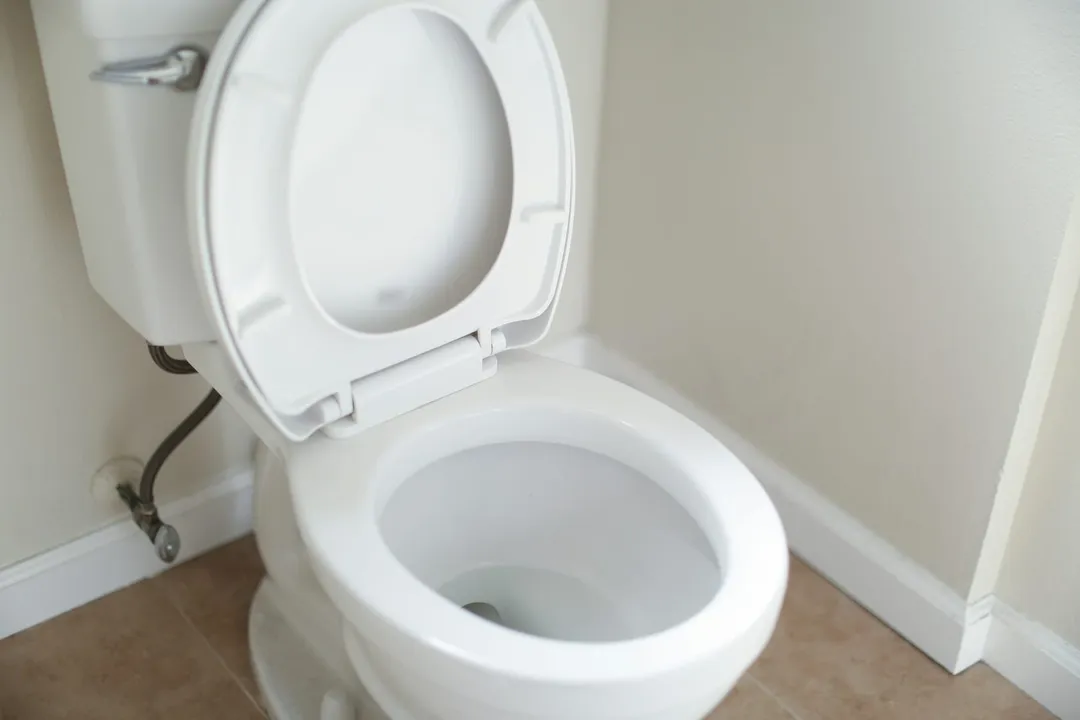
A running toilet is easy to ignore. It hisses for a minute every so often, or you hear it refill in the night when nobody has flushed. That sound is water going straight from the supply to the drain.
The amount adds up. A worn flapper that lets a thin trickle through can waste somewhere around 100 to 200 litres a day. A fill valve that never shuts off and runs into the overflow can waste well over 1,000 litres a day. Either way, it shows on the water bill, and nearly always the fix is a part that costs less than a takeaway.
Find the leak with a dye test
Before you buy anything, find out where the water is going.
- Lift the tank lid and set it down on a towel. It is heavy and breaks easily.
- Add a few drops of food colouring to the tank water. Do not flush.
- Wait 15 to 20 minutes.
- Look in the bowl. If colour has appeared there, water is leaking past the flapper.
If the bowl stays clear but the toilet still refills on its own, look at the overflow tube instead. Water running into it means the water level is set too high, or the fill valve is not shutting off.
How to read the tank
With the lid off, you will see the same few parts in almost every tank:
- The flapper: the rubber seal at the bottom that lifts when you flush. Rubber hardens and warps with age, and a warped flapper no longer seals.
- The chain: links the flush handle to the flapper. Too short and it holds the flapper open a little; too long and it can get trapped under it.
- The fill valve: the tall valve on one side that refills the tank after a flush.
- The float: a cup on the fill valve, or a ball on an arm, that rises with the water and shuts the fill valve off.
- The overflow tube: the open pipe in the middle. If water rises above it, it drains into the bowl.
The water line should sit about 2 to 3 cm below the top of the overflow tube. Most tanks have a mark on the inside wall.
What you need
- A replacement flapper that matches the size of your flush valve opening, usually 5 or 7.5 cm
- A towel and a small bucket
- A sponge to soak up the last of the water
- Rubber gloves
- A screwdriver if the float is adjusted by a screw
Fix it step by step
Shut the stop valve
The stop valve is on the wall or floor behind the toilet, where the supply pipe comes out. Turn it clockwise until it stops. Do not force it.
Flush to empty the tank
Hold the handle down so the tank drains as far as it will. Sponge out what is left into the bucket.
Replace the flapper or adjust the float
If the dye test showed a leak, unhook the old flapper from the two pegs on the overflow tube, unclip the chain, and fit the new one the same way. Set the chain with about one link of slack when the flapper is closed.
If the water was running into the overflow, lower the float instead. On a cup float, squeeze the clip or turn the adjustment screw to slide it down. On a ball float, bend the arm down slightly or turn the screw on top of the valve.
Refill and test
Open the stop valve slowly. Let the tank fill and check the water stops at the right line. Flush a few times, then repeat the dye test to confirm the bowl stays clear.
If the fill valve still hisses
A fill valve that keeps hissing after the float is set correctly has a worn seal inside. Replacing the whole valve is a common job, but it means disconnecting the supply under the tank. If you are not comfortable with that, it is a short visit for a plumber.
When to call a plumber
Some of what you find in the tank is not a weekend fix:
- A cracked tank or bowl. Even a hairline crack can open without warning. Shut the stop valve and leave the toilet off until it is replaced.
- A stop valve that will not close. Old valves seize, or turn all the way and still let water through. Forcing one can break it off the pipe. The valve needs replacing before any other work.
- Water around the base. Water on the floor around the toilet usually means the seal between the toilet and the waste pipe has failed. Left alone it soaks into the floor below.
- The same part failing again within months. That can point to high water pressure or hard water wearing parts out early.
If the dye test points to a problem you would rather not take on, book a fixture repair. The technician brings the common flappers and fill valves, checks the stop valve and the seal at the base, and tests the toilet before leaving.
Written by
Tom B.
Drain and sewer technician
Runs the camera and the jetter across all four areas, and keeps the video of every line he inspects.