Most leaks we find were running for months before anyone called. A drip under a sink is easy to spot. A pinhole in a pipe under a concrete floor or inside a wall can waste thousands of litres and soak the structure long before a stain appears. The earlier you catch one, the smaller the repair.
The signs, from the most common
A water bill that jumps. If your usage has not changed and the bill has gone up by a quarter or more, water is going somewhere. Compare the same months across two years.
Stains, bubbling paint, or swollen plaster. A yellow or brown ring on a ceiling, paint that blisters, or plaster that feels soft under a thumb. On a ceiling, the stain is often not directly under the leak: water runs along a joist or pipe before it drips.
A musty smell that does not go away. Damp timber and plaster smell like a cellar. If a room smells that way with the windows open and nothing visible, the damp is inside a wall or under the floor.
A warm spot on a slab floor. In homes with hot water pipes under a concrete floor, a leak on the hot side warms the slab above it. Walk barefoot: a patch that is warmer than the rest of the room is worth a call.
The sound of running water. Stand in the quietest room at night with every tap off. A hiss or a trickle inside a wall means water is moving where it should not.
Loose or cracked floor tiles. Water under tiles softens the adhesive. Tiles start to sound hollow when you tap them, then lift or crack, often near a bathroom or kitchen wall.
Mould behind furniture. Black spots on the wall behind a wardrobe or a sofa, on a wall with pipes in it, point to damp from inside, not just from poor airflow.
Low water pressure. A leak large enough to notice on the meter often lowers pressure at the taps as well.
Confirm it with the water meter
The meter test takes half an hour and costs nothing.
Turn off every tap and appliance
Close all taps, stop the washing machine and dishwasher, and wait until every toilet cistern has finished filling, with no outside tap or irrigation running.
Find the meter and note the reading
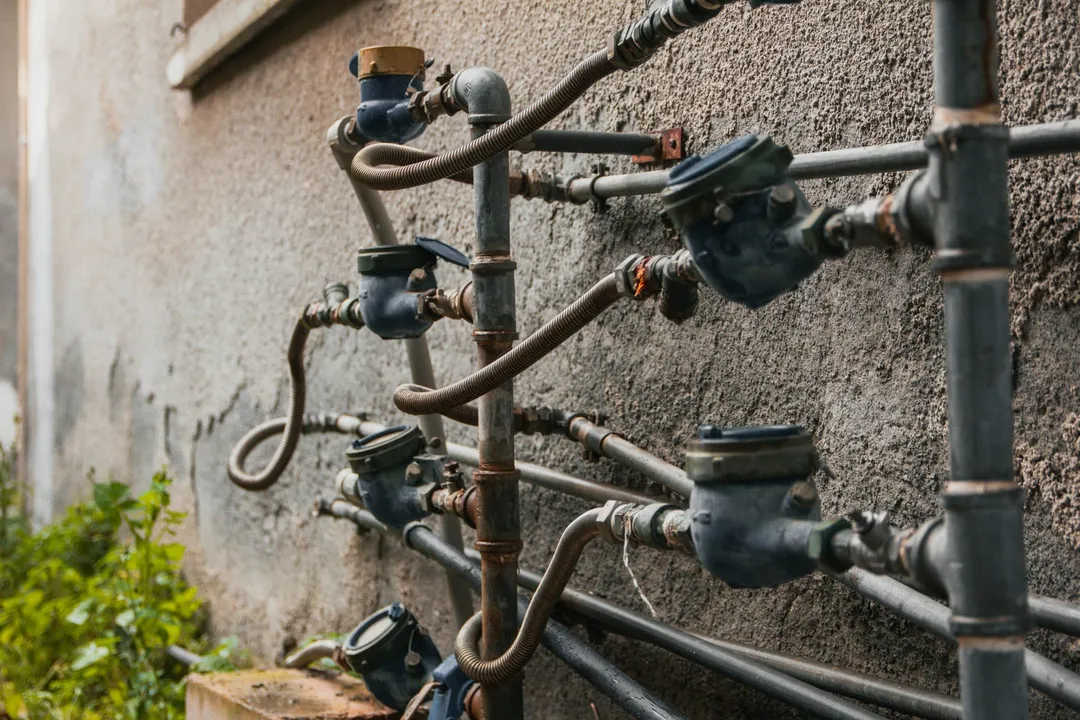
The meter is usually at the boundary of the property, in a pit near the street, or where the supply enters the house. Write down the full reading, or take a photo. Many meters also have a small red or black dial or triangle that turns with even a slow flow.
Wait 30 minutes without using any water
Do not flush or run a tap. An hour gives a clearer result.
Read the meter again
If the reading has changed, or the small dial has moved, water is leaving the pipes somewhere.
Close the main stop valve and repeat
With the main valve inside the house closed, read the meter again after 30 minutes. If it still moves, the leak is on the supply pipe between the meter and the house. If it stops, the leak is inside the house.
Check the toilets first
A toilet with a worn flap or a fill valve set too high runs water into the bowl all day, and it will move the meter. Put a few drops of food colouring in the cistern and wait 15 minutes without flushing. If colour appears in the bowl, you have found your leak, and it is a small repair.
What a leak detection visit does
The old way to find a hidden leak was to open walls until you found it. Today a technician narrows it down first, so the wall or floor is opened in one place only.
Acoustic listening. Water escaping under pressure makes a sound. A ground microphone and headphones pick it up through concrete and tiles, and the sound is loudest right above the leak.
A thermal camera. On hot water pipes, and on walls damp from a leak, the camera shows a temperature pattern that follows the water.
A moisture meter. It reads how wet a wall or floor is without making a hole, and maps where the damp starts and how far it has spread.
A pressure test. Each section of pipe is isolated and pressurised. A section that loses pressure is the one with the leak.
No. TIP-014
Leak detection
What a leak detection visit covers
- Meter test to confirm the leak and its size
- Pressure test of each pipe section
- Acoustic listening along the pipe route
- Thermal camera scan of walls and floors
- Moisture readings to map the damp area
- The leak marked on the wall or floor, ready to open in one spot
- A written report with photos for your insurer
From$125/ h
If the meter moved, or you have two or more of the signs above, book a leak detection visit. The technician will find the source before anything is opened, and can usually make the pipe repair on the same visit.
Written by
Marco D.
Lead service plumber
Leads service calls in Elm Park and writes the repair checklists the plumbers work from.